%20(1)_edited_edited.png)
NEIGHBORHOOD
Sherman Hills
Why we love it
Sherman Hill is the city’s oldest signature urban residential district: a west-of-downtown neighborhood where Victorian houses, cottages, apartments, and a few commercial buildings all coexist within a tight historic footprint. It feels urban because it is close to downtown, but what really distinguishes it is that preservation not wholesale replacement became the neighborhood’s long-term strategy. If you want to understand how Des Moines saved one of its oldest residential environments from complete erosion, Sherman Hill is the place to study.
Origins and early history
The story starts with Hoyt Sherman, who bought five acres in 1850 at what is now 15th and Woodland. His mansion, now Hoyt Sherman Place, was completed in 1877 and helped anchor the neighborhood that spread outward across the bluffs west of the early city. Most of Sherman Hill was platted between 1877 and 1882 as a stylish western suburb overlooking downtown. Important people lived there, but it was never purely an elite district. From the start, larger Victorian houses and smaller cottages were mixed together, which is one reason the neighborhood still feels socially legible and architecturally varied.


Community identity and culture
Sherman Hill is preservation-minded, but it is not sleepy. Its culture is neighborhood-activist culture: tours, historic-house pride, seasonal events, design review, local businesses, and a strong sense that residents are custodians of an irreplaceable piece of Des Moines. That is why the area feels emotionally distinct from Waterbury or Beaverdale. In Sherman Hill, people are not just enjoying a stable neighborhood. They are participating in a long-running act of rescue, maintenance, and reinterpretation.
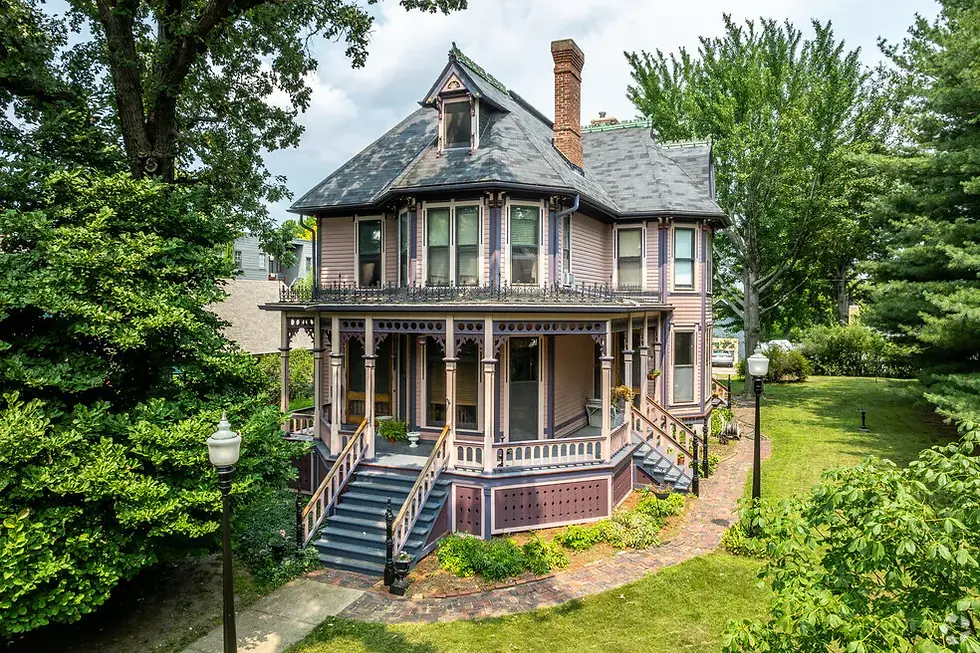
Sherman Hill’s housing stock is its superpower. The area includes Queen Anne, Italianate, Eastlake, and other late-nineteenth-century forms, plus later brick apartment buildings that make the neighborhood feel genuinely urban instead of purely house-museum historic. That mix is why Sherman Hill attracts more than one buyer type: lovers of ornate restoration projects, people who want a smaller historic cottage, and people who want apartments or condos near downtown without giving up neighborhood character. Just as important, the district is protected. Exterior alterations, demolition, and new construction within the local historic district require a Certificate of Appropriateness, so buyers are not just purchasing a house; they are purchasing into a shared preservation framework
Sherman Hill matters because it is one of Des Moines’ best arguments for preservation-led urban revival. It also matters because it forces the city to remember what was lost nearby on Center Street. The neighborhood is not only pretty old housing. It is a living record of settlement, density, decline, redlining, freeway-era isolation, and resident-led recovery.
MORE ABOUT SHERMAN HILLS
Why people love Sherman Hill
Sherman Hill offers a mix of historic charm, walkability, and quick access to downtown Des Moines. From unique architecture to a strong sense of community, it’s a neighborhood full of character that continues to attract buyers looking for something different.
Whether you love older homes, city convenience, or neighborhoods with personality, Sherman Hill gives you a little bit of everything.