%20(1)_edited_edited.png)
NEIGHBORHOOD
HIGHLAND PARK
Welcome to highland Park
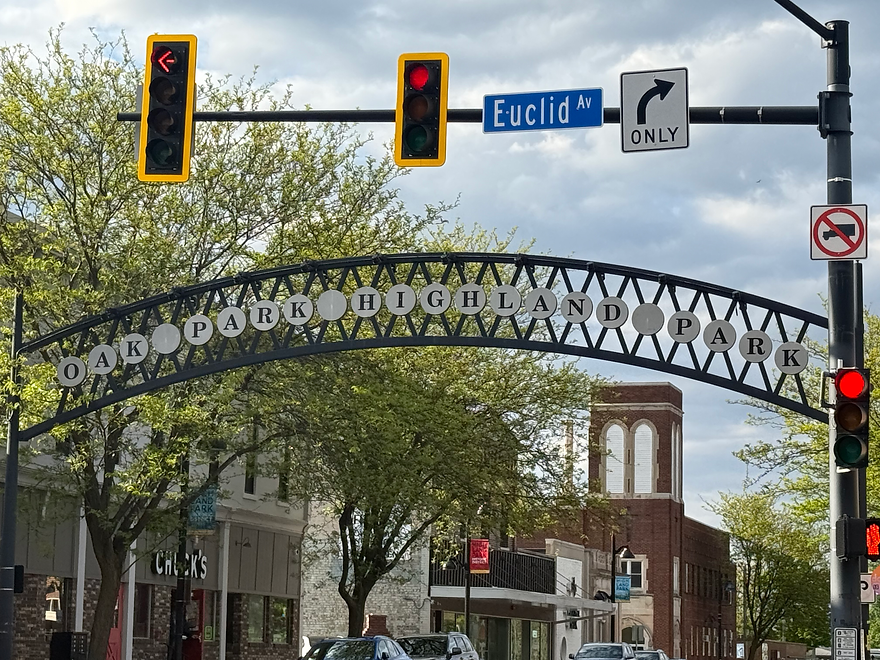
Highland Park is north of the river and centered on the Euclid and Sixth corridor, where the neighborhood still reads like a self-contained small-town main street inside the city. Local history organizations and city redevelopment material both frame it as part of the old north-side “streetcar suburb” landscape, and current revitalization groups market it as a walkable, high-value first-home neighborhood close to downtown jobs and amenities. What makes it stand out is that the business district still carries the memory of being a true community center, not just a strip of storefronts
Origins and early history
Highland Park grew out of Des Moines’ late nineteenth-century northward expansion. As North Des Moines formed in 1880, developers crossed the river, created Highland Park and Oak Park as independent communities, built a bridge at Sixth Avenue, established a zoo on the river lowlands, and helped anchor the area with Highland Park College at Second and Euclid. That combination mattered: a bridge, a college, a streetcar, and a business district gave the area more than subdivision status. It functioned as a real satellite town before annexation folded it into a larger Des Moines.


Community identity and culture
Highland Park today feels less like a museum district and more like a neighborhood in active recovery. That is part of its draw. The city’s own redevelopment material points to significant business-district momentum, and 2026 local coverage tied the area’s revival to new shops, restaurant investment, adaptive reuse, and a deliberate attempt to keep old structures relevant instead of simply flattening them. The emotional character of Highland Park is not polished west-side ease. It is visible effort, visible history, and visible comeback
Highland Park is not just “up-and-coming.” It is historically important, physically distinctive, and currently under active reinvestment. Its best angle is that it still feels like a real neighborhood center rather than a neighborhood that depends on somewhere else for identity. Its biggest trade-off is that revitalization remains uneven enough that buyers need to evaluate specific blocks, not just the zip code
Highland Park and Oak Park started as independent streetcar suburbs before being annexed into Des Moines, with early growth driven by developers who even helped build a bridge on Sixth Avenue and a small zoo along the river. Highland Park College, founded in 1889 and later renamed Des Moines College in 1918, once stood at Second and Euclid an area later tied to Park Fair Mall. Historic landmarks like the Highland Park Odd Fellows Hall, built in 1907, still play a role in current redevelopment discussions. Recently, the district has seen steady momentum with six new establishments and 13 additional restaurants, bars, and shops opening. In April 2026, the city also invested $750,000 in federal funds to restore the University of Commerce building, while a new basin park created after the 2018 flooding adds both function and appeal to the neighborhood.